
Being injured due to someone else’s negligence likely means you’re dealing with physical pain, medical bills, and possibly lost wages, all while navigating the often confusing world of personal injury claims. One of the biggest questions you may have is: how are personal injury settlements calculated?
This comprehensive guide will break down the process, explaining the key components, factors influencing the final amount, and what to expect during the settlement negotiations.
Navigating the personal injury lawsuit process in New York can be difficult for those unfamiliar with the legal system. If you’ve been injured in an accident and are considering your options, it’s crucial to understand your rights and the steps involved in receiving fair compensation.
At The Ahearne Law Firm, we have a team of personal injury attorneys who can help you through this difficult time with compassion and skill.
Understanding the Basics: What Are Personal Injury Settlements?
A personal injury settlement is a financial agreement reached between you, the injured party, and the responsible party (or their insurance company) to compensate you for your injuries and losses. These settlements can arise from various types of accidents, including car accidents, medical negligence, and slip and falls.
The Key Components of a Settlement
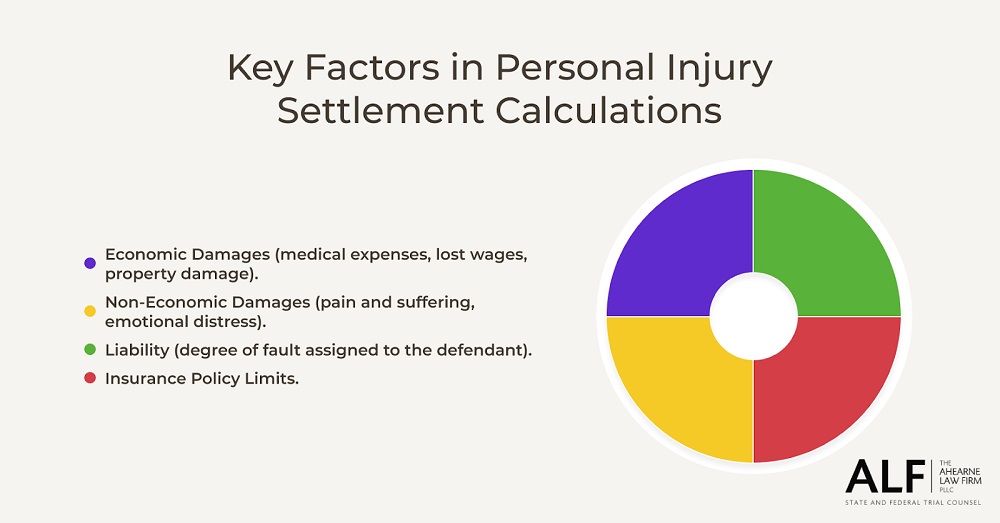
Personal injury settlements are generally structured around two main components:
Economic Damages
These are quantifiable financial losses directly resulting from the injury, such as:
- Medical bills
- Lost wages
- Property damage
- Future medical expenses
Keeping your receipts, bills, and other documents organized can help your lawyer assess your damages and calculate a fair value to compensate you.
Non-Economic Damages

These are intangible losses related to pain, suffering, and the impact on your life. They are harder to quantify and include:
- Pain and suffering
- Emotional distress
- Loss of consortium (in cases involving injuries to a spouse)
- Loss of enjoyment of life
Your non-economic damages will not undo the suffering you have experienced, but they can mitigate the financial impact of your injury and give you a sense of justice.
How Do Insurance Companies Calculate Pain and Suffering?
There’s no simple formula to calculate pain and suffering, which is often the most significant part of a personal injury settlement. Insurance companies consider various factors to determine a fair value:
- Severity of the Injury: This includes the extent of your physical injuries, any permanent disabilities, and long-term effects on your health.
- Duration of Suffering: The longer you experience pain and emotional distress, the higher the potential compensation.
- Impact on Quality of Life: If your injury affected your ability to work, participate in hobbies, and maintain relationships, this could factor into your claim’s value.
Other factors can also influence the valuation, such as your age, future earning potential, and any pre-existing conditions.
What Is the Formula for Personal Injury Settlements?
While insurance companies may use “multipliers” to calculate non-economic damages, the final amount often reflects a negotiation between the parties. Every case is unique, and state laws can also influence how settlements are calculated.
Factors Influencing the Settlement Amount
Several factors beyond the basic components of economic and non-economic damages play a significant role in determining the final settlement amount. Understanding these factors can help you understand the process better and potentially maximize your recovery.
Liability and Negligence
The level of fault attributed to the responsible party is a crucial factor. If you are found to be partially at fault, your compensation may be reduced. Understanding the nuances of liability and negligence can be complex.
Your Medical Records and Evidence

To build a strong case, provide your lawyer with detailed and accurate medical records, bills, and other documentation related to your injury. Gathering additional evidence, such as photos of the accident scene, witness statements, and expert opinions, can further strengthen your claim.
Your Negotiation Skills and Legal Representation
Knowing how to negotiate effectively with insurance companies is vital. While you can try negotiating on your own, having an experienced personal injury attorney on your side can significantly impact your outcome. A lawyer can help build a strong case and advocate for your best interests.
The Role of Insurance Companies
Insurance companies play a crucial role in personal injury settlements. They are responsible for evaluating claims, determining liability, and negotiating settlement amounts with the injured party.
While they are supposed to act in good faith, insurance companies often prioritize minimizing their payouts. They may employ tactics like delaying payments, disputing the severity of injuries, or offering lowball settlements.
How Are Personal Injury Settlements Paid Out?

personal injury attorneys in the Hudson Valley
Once an agreement is reached, the settlement process culminates in the actual payment of compensation. Understanding the different payment methods, procedures, and potential tax implications will give you a clear picture of how the final settlement amount will be distributed.
The Settlement Agreement
Once an agreement is reached, you’ll sign a settlement agreement outlining the terms of the payout. It’s crucial to review the agreement carefully and ensure you feel comfortable with the details before signing. It’s important to understand that personal injury settlements may be subject to taxes.
Payment Methods
Personal injury settlements are typically paid out in checks or bank transfers through a lump sum or a structured settlement. In a lump sum, you receive the entire settlement amount in a single payment, whereas a structured settlement is paid out over time, often through periodic payments. This option can offer tax advantages and financial planning benefits.
Frequently Asked Questions
What are some common tactics insurance companies use to lower settlements?
Insurance companies often employ tactics like delaying payments, disputing the severity of your injuries, or offering lowball settlements. It’s essential to be prepared for these tactics and have a strong legal advocate on your side.
How long does it take to receive a personal injury settlement?
The time frame for settlements varies greatly depending on the complexity of the case, the insurance company’s responsiveness, and other factors. It can take several months or even longer.
What should I do if I’m unhappy with the offered settlement?
If you believe the offered settlement is unfair or inadequate, don’t hesitate to consult with an attorney. They can advise you on your options, including negotiating a higher settlement or pursuing further legal action.